
The Global Shutdown of Claude Fable 5 and Mythos 5: When a Jailbreak Triggers an Export Control
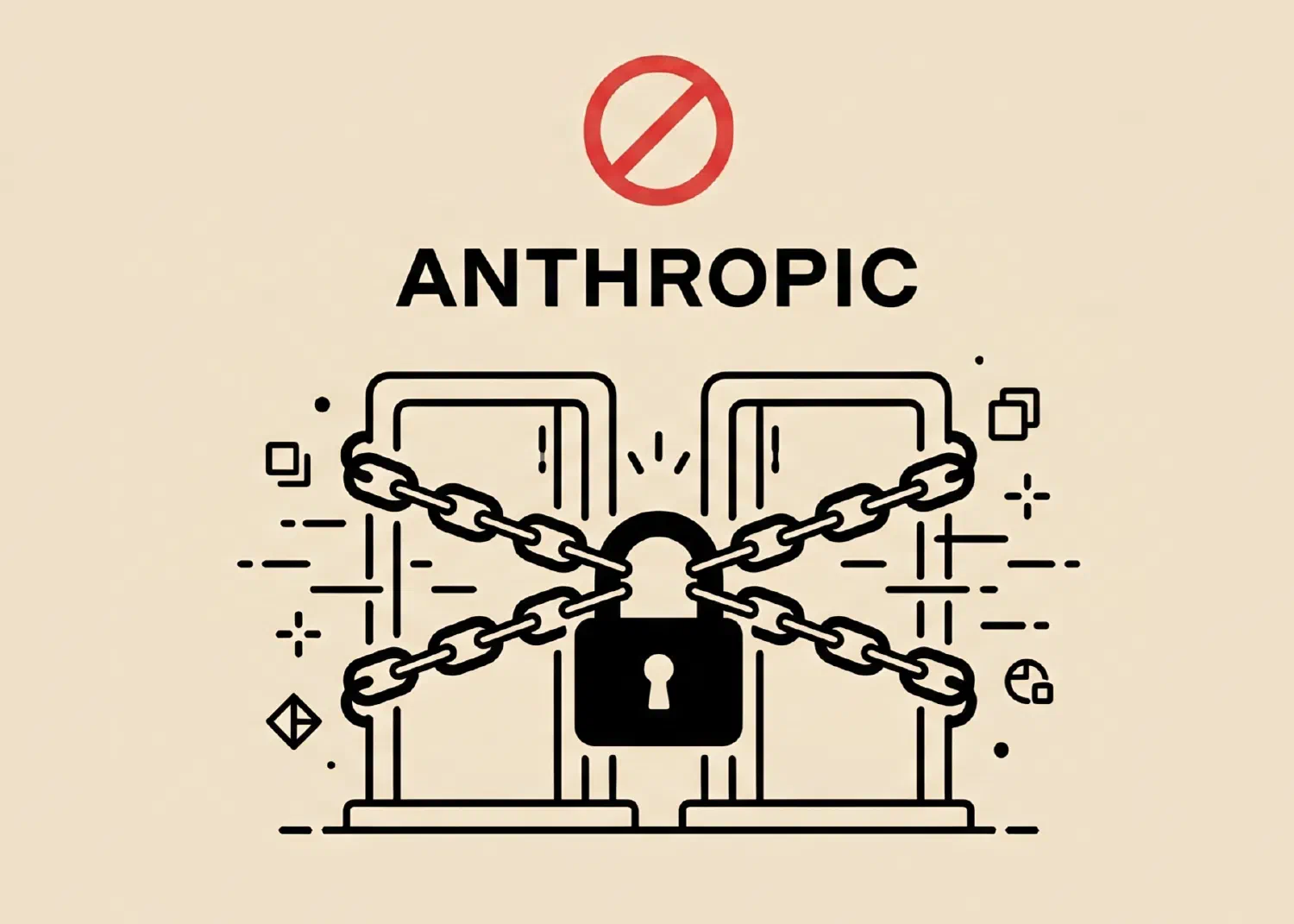
The Global Shutdown of Claude Fable 5 and Mythos 5: A Jailbreak That Tripped an Export Control
On June 12, 2026, Anthropic took its Mythos-class models—Fable 5 and Mythos 5—completely offline for every customer worldwide, barely three days after they launched. The trigger: a U.S. government export-control directive barring access for any foreign national, issued after word spread of a method to slip past the models’ guardrails (a “jailbreak”). It’s the first known case of a frontier provider pulling a production model because the federal government stepped in.
Technical Summary
| Field | Detail |
|---|---|
| Affected models | Claude Fable 5 (the guardrailed, classifier-fronted release) and Claude Mythos 5 (restricted access, same base weights) |
| Developer | Anthropic |
| Incident type | Guardrail jailbreak / bypass → escalated into regulatory action (export control) |
| Reported vector | Multi-agent attack: prompt decomposition/recomposition, Unicode homoglyphs, narrative framing, and long-context prompting. Attributed to “Pliny the Liberator” |
| Demonstrated capability (alleged) | Step-by-step exploitation guidance (x86 Linux stack buffer overflow) and a leak of the system prompt (~120,000 characters) |
| Impact | Global blackout of both models; the rest of the catalog (Opus 4.8, etc.) unaffected |
| Launch date | June 9, 2026 |
| Directive / shutdown date | June 12, 2026, 5:21 PM ET |
Incident Timeline
| Date | Event |
|---|---|
| April 2026 | The Mythos Preview draws attention for its ability to pinpoint security flaws in software |
| Feb–Mar 2026 | Anthropic refuses Pentagon demands (autonomous weapons / surveillance); gets designated a “supply-chain risk” and is ordered out of federal-agency use |
| June 9, 2026 | Dual launch of Fable 5 (public, classifier-gated) and Mythos 5 (closed, under Project Glasswing) |
| ~June 11, 2026 (≈48 hrs) | “Pliny the Liberator” publishes the jailbreak method and what he claims is the model’s internal system prompt (~120k characters) |
| June 12, 2026, 5:21 PM ET | Anthropic receives the Commerce Department directive: suspend all foreign-national access, inside and outside the U.S. |
| ~June 12, 2026 (≈72 hrs) | Both models go dark worldwide, because access can’t be filtered by nationality |
Background: A Dual Launch That Didn’t Survive the Weekend
On June 9, 2026, Anthropic launched two models from its new Mythos class—a tier the company places above its Opus class in raw capability. Fable 5 and Mythos 5 share the same base model and differ only in a layer of safety classifiers.
Fable 5 was the general-availability, “guardrails on” release. When a query trips a classifier in a high-risk category—cybersecurity, biology, chemistry, or model distillation—Fable 5 doesn’t answer with the full model: it silently falls back to a weaker one (Claude Opus 4.8) and tells the user it has switched. Mythos 5, with some of those restrictions stripped out, was kept to a closed set of vetted organizations under the Project Glasswing program, precisely because of cybersecurity concerns.
Ahead of launch, Anthropic put in more than a thousand hours of red-teaming with U.S. and U.K. agencies plus an external bug-bounty program, and said it had found no universal jailbreak. Within roughly 72 hours, both models were dark worldwide—not because of an outage, but because of a regulatory order.
The Technical Problem: The Jailbreak and the Fragility of Guardrails
What was claimed
Shortly after launch, the red-teamer who goes by “Pliny the Liberator”—a figure known for publishing bypasses of nearly every frontier model—publicly claimed to have “liberated” Fable 5. By his account, the technique didn’t exploit a code vulnerability at all; it leaned on flaws in the model’s own logic and its classification layer. The reported vector stitched together a handful of well-known evasion techniques:
- Decomposition / recomposition: splitting a forbidden request into individually harmless sub-prompts that reassemble into a restricted output once stitched back together.
- Homoglyphs / Unicode manipulation: swapping characters for visually identical look-alikes so the classifier never sees the “forbidden word.”
- Narrative framing and long context: wrapping the request in an academic or fictional frame and leaning on extended conversations.
- Multi-agent coordination (which the author described as a “pack hunt”).
The screenshots making the rounds allegedly showed step-by-step x86 Linux stack-buffer-overflow exploitation guidance, alongside a leak of the model’s system prompt (~120,000 characters) pushed to a public repo.
Why this matters from a cyber-risk standpoint: the worry isn’t that an LLM “knows” about overflows—that’s widely available knowledge. It’s that a frontier-class model, tuned for software engineering, can be pointed at a specific codebase to find and fix flaws. Flip that same capability around and it becomes assistance for discovering and exploiting vulnerabilities at scale.
Anthropic’s position: a disputed bypass
Anthropic denies this counts as a real jailbreak in any strict sense, and that disagreement sits at the heart of the incident. The company argues that a genuine jailbreak would have to defeat the core safeguards and deliver meaningful uplift toward high-risk activity, whereas what was demonstrated rests on coaxing—pushing the model to keep going despite its conversational refusals—a long-standing, well-documented limitation common to almost every LLM. Per the company, the technique the government built its directive on only surfaced a handful of minor, already-known vulnerabilities, and other publicly available models—it points to GPT-5.5—produce the same output with no bypass required.
Crucially, Anthropic doesn’t pitch its classifiers as airtight: it openly admits that no provider achieves perfect jailbreak resistance today. Its approach is a defense-in-depth strategy framed as a deliberate design choice: engineer non-universal jailbreaks to be narrow in scope, make universal ones prohibitively expensive to produce, and pair both with comprehensive monitoring to catch and shut down successful attacks fast. As part of that strategy, Anthropic put a 30-day customer-data retention policy in place for Mythos-class models, meant to support ongoing jailbreak research and mitigation.
The argument over severity matters less than the operational fact: a frontier model’s containment layer was at least partly bypassed in a matter of hours, using nothing but prompt manipulation—no classic software exploit involved. The attack surface here is the classifier’s logic, not the binary. And that 30-day retention brings its own data-residency wrinkle: prompts and outputs sent to these models were held for a month.
The Regulatory Angle: Export Control on the Model, Not the Chip
The U.S. government, citing national-security authorities, issued an export-control directive (signed by Commerce Secretary Howard Lutnick, per NBC News) ordering all access to Fable 5 and Mythos 5 suspended for any foreign national, inside or outside the U.S., including Anthropic’s own foreign-national employees.
The letter landed on June 12 at 5:21 PM ET and didn’t spell out the specific concern; Anthropic’s read is that it ties back to the jailbreak method. Since you can’t reliably separate foreign nationals from U.S. users in real time, the only way to comply was to shut both models off for everyone. The rest of Anthropic’s catalog stayed up. The company said it disagreed with the move, called it a likely misunderstanding, and committed to publishing more technical detail within 24 hours of the directive.
What’s actually unprecedented here isn’t export-controlling software—encryption sat under ITAR/EAR controls all through the 1990s “Crypto Wars.” What’s new is the object of the control: historically, AI-related restrictions landed on hardware (advanced compute chips); here they land on the model and its access, treating the model’s capability as controlled technology in its own right. Regulatory risk shifts from the silicon layer up to the API layer.
Context, without editorializing: this didn’t happen in a vacuum. In February–March 2026, Anthropic refused to strip safeguards for use in autonomous weapons and surveillance at the Pentagon’s request, which led to its “supply-chain risk” designation. The actionable takeaway for a risk analysis isn’t who’s right—it’s the plain fact that an AI provider’s availability can hinge on a dispute between that provider and a government.
Impact and Recommendations (DevSecOps / Blue Team)
Regardless of who’s right about the bypass’s severity, the operational effect is concrete: a production model vanished on a few hours’ notice. This is an externally induced, high-severity availability incident with two traits that set it apart from an ordinary outage: it’s not transient by design (the root cause is legal, not technical, so no vendor runbook fixes it) and it’s not covered by the SLA (a government order typically falls under force majeure / legal-compliance clauses).
Blast Radius
- CI/CD pipelines and coding assistants wired to the Fable 5 endpoint: immediate degradation or breakage.
- Products with the model “chained” in (agents, code-analysis tools): cascading failures with no fallback.
- Compliance and data residency: a directive that discriminates by nationality—on top of the 30-day retention—introduces risk axes few threat models account for.
Technical Recommendations
- Diversify models / abstract the provider. Put a routing layer (an LLM gateway/abstraction) in front so you can swap providers without rewriting the integration. Don’t couple business logic to a specific model string.
- Don’t lean on a single frontier API for critical functions. Stand up a fallback model from a second provider, pre-validated against your prompts and evals, and exercise the failover (game days).
- Keep a local open-weight model as contingency. An open-weight model running on-prem or in your own VPC is a guaranteed degraded mode—and it also inoculates you against regulatory takedown, since the weights already live inside your perimeter.
- Make contingency plans executable. Treat “model X becomes unavailable in under an hour” as a scenario in your incident runbook, with clear activation criteria and automated fallback.
- Don’t outsource security to the provider’s guardrails. Enforce hard controls in your own application and API layer (server-side input/output filtering in sensitive domains), not just conversational refusals. If the provider’s classifier fails, your compensating control has to still be standing.
- Audit the provenance of every response. Given the silent fallback to a weaker model, demand and log the model metadata the API returns. If it isn’t exposed, treat that as an output-integrity risk.
- Fold regulatory risk into your vendor risk assessment. How does the provider segment access by jurisdiction/nationality? What clauses cover a government order? How long does it retain your data? Is there a bring-your-own-weights option? What’s the real RTO if the model gets pulled?
Operational warning. If a single frontier endpoint is a single point of failure for a business process at your org, this incident is your borrowed post-mortem. The odds of a “shutdown for non-technical reasons” are no longer zero.
Wrapping Up…
Setting aside who ends up right about whether the bypass was a real jailbreak, the Fable 5 / Mythos 5 incident leaves a precedent that’s hard to ignore for security engineering:
- The classification layer as a blunt instrument. A keyword-and-category classifier standing between a user and a capable model is, by design, evadable through decomposition and obfuscation. LLM security maturity is still being fought out at that boundary—and Anthropic itself treats failure as inevitable: its bet isn’t a perfect wall, it’s making the bypass expensive and detectable.
- A model’s security property can have global availability consequences. That a vulnerability—real or perceived—in an LLM can lead to its worldwide shutdown rewrites the mental model of vendor risk.
- A transparent fallback is still a fallback. Surfacing the downgrade to Opus 4.8 makes the system more honest, but the legitimate researcher still ends up with the weaker model.
The engineering takeaway isn’t alarmist, it’s architectural: depending on a single cloud-hosted frontier model for a critical function is, right now, a first-order architectural risk. You mitigate it the usual way—decoupling, redundancy, local contingency, your own controls—applied to a dependency many teams still treat as permanent. The day the model isn’t there—whether from an outage, a price change, or a decree—your system has to stay standing.
References
Anthropic. (2026, June 9). Claude Fable 5 and Claude Mythos 5. https://www.anthropic.com/news/claude-fable-5-mythos-5
Anthropic. (2026, June 12). Statement on the US government directive to suspend access to Fable 5 and Mythos 5. https://www.anthropic.com/news/fable-mythos-access
Bloomberg. (2026, June 13). Anthropic Says US Orders Halt to Foreign Access for Fable 5, Mythos 5. https://www.bloomberg.com/news/articles/2026-06-13/anthropic-says-us-limits-foreign-access-to-fable-5-mythos-5
CNBC. (2026, June 12). Anthropic disables access to Fable 5 and Mythos 5 to comply with government directive. https://www.cnbc.com/2026/06/12/anthropic-disables-access-to-fable-5-and-mythos-5-to-comply-with-government-directive.html
NBC News. (2026, June 13). Anthropic suspends new AI models after government directive. https://www.nbcnews.com/tech/tech-news/anthropic-suspends-new-ai-models-fable-mythos-government-directive-rcna349901
Cyber Security News. (2026, June 13). Anthropic Fable 5 and Mythos 5 Access Blocked to All Users Following Government Directive. https://cybersecuritynews.com/anthropic-fable-5-and-mythos-5-access-blocked/
Fortune. (2026, June 13). Anthropic disables Fable and Mythos AI models following U.S. government export ban. https://fortune.com/2026/06/13/anthropic-disables-fable-mythos-export-controls-national-security-threat/
SecurityWeek. (2026, June 11). Anthropic Disputes Fable 5 AI Jailbreak. https://www.securityweek.com/anthropic-disputes-fable-5-ai-jailbreak/
Cybersecurity News. (2026, June 12). Anthropic’s Claude Fable 5 Alleged Jailbreak to Generate Stack Exploits. https://cybersecuritynews.com/anthropics-claude-fable-5-jailbroken/
Congress.gov (CRS). Pentagon-Anthropic Dispute over Autonomous Weapon Systems. https://www.congress.gov/crs-product/IN12669
NPR. (2026, February 26). Deadline looms as Anthropic rejects Pentagon demands it remove AI safeguards. https://www.npr.org/2026/02/26/nx-s1-5727847/anthropic-defense-hegseth-ai-weapons-surveillance